Every subscription offers the same choice: pay monthly and stay flexible, or pay annually and save. The discount — typically 15 to 25 percent — looks like free money, and for the right app it is. For the wrong app, it is a prepayment to a company that might not be there in twelve months, for a tool you might not want in six. This guide lays out the real trade-offs and a framework for deciding, subscription by subscription.
The billing-cycle decision sits at the intersection of our other guides: the format thinking in The 5 File Formats That Keep Your Exported Data Usable protects the data regardless of cycle, and the dependency mapping in 2026 App Dependency Audit: Map Every App Your Life Depends On tells you which apps deserve the annual commitment.
The case for annual
The math is straightforward: annual plans typically save 15–25 percent versus twelve monthly payments — two to three free months. For apps you have used for years and will use for years more, that is a genuine, risk-free return. There is also a subtle behavioral benefit: annual billing removes the monthly “should I keep this?” friction for tools you have already decided to keep, reducing decision fatigue.
Annual also signals — to yourself and the company — commitment. Companies treat annual subscribers as their core base: better support tiers, grandfathered pricing, early feature access. And from the shutdown-risk perspective, an annual plan with a healthy company is simply cheaper; the risk premium only matters where risk exists.
The case for monthly
Monthly is optionality, priced plainly. You can leave any time, for any reason — the app declines, a better alternative appears, your needs change, the company gets acquired — with at most one month’s exposure. In an industry where apps shut down regularly, that optionality has real value, and the monthly premium is its price.
Monthly also enforces honesty. Each payment is a small re-decision: is this still worth it? That friction, annoying as it feels, is what kills zombie subscriptions before they accumulate. Annual plans, by contrast, let a forgotten subscription bill you for a full year before you notice — the renewal email buried in spam, the charge appearing as a lump sum you do not scrutinize.
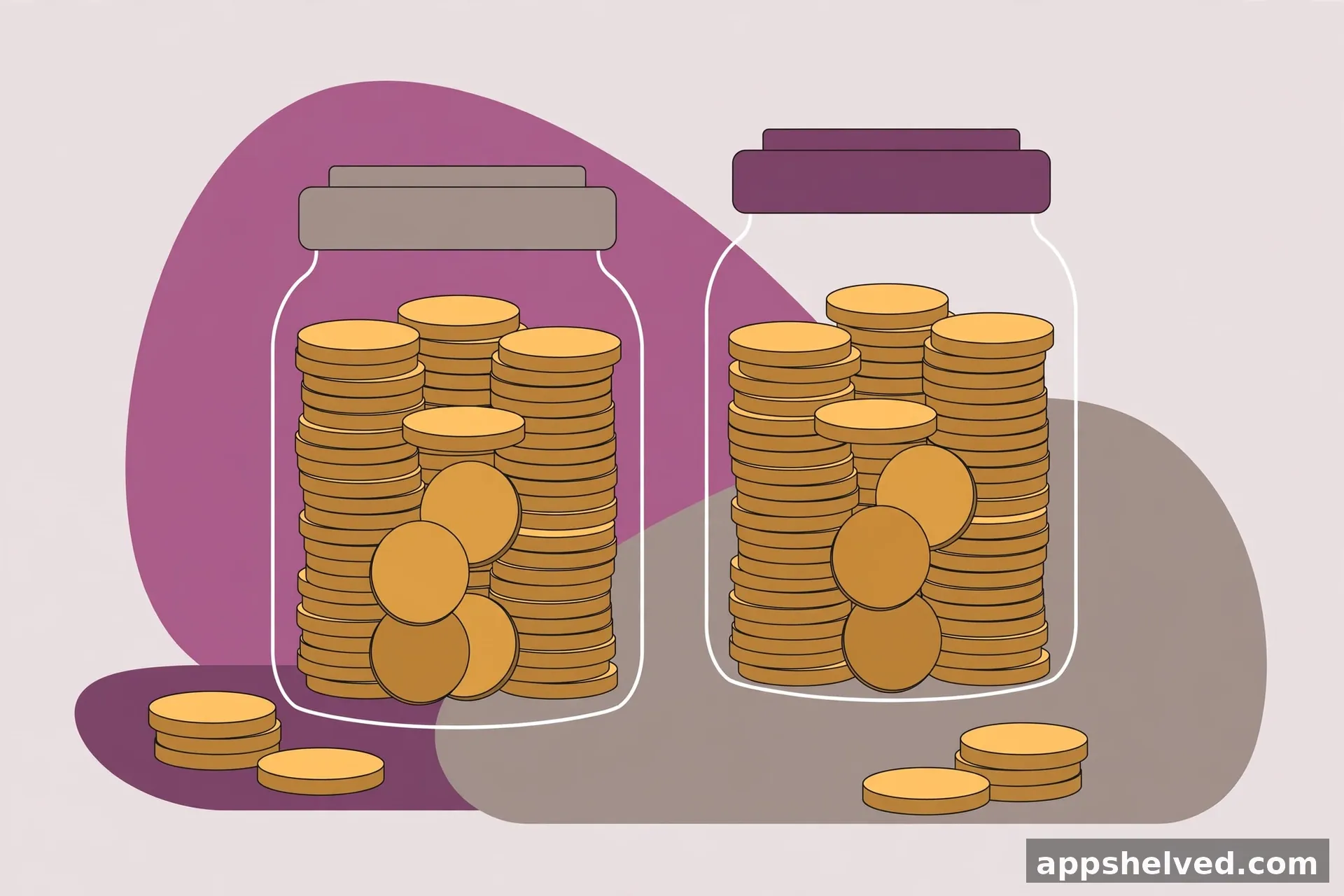
The shutdown-risk dimension
Here is the trade-off the pricing pages never mention: annual prepayment is an unsecured loan to the company. If the app shuts down mid-cycle, your refund depends on the company’s grace and solvency — graceful companies pro-rate, struggling ones do not, and bankrupt ones cannot. The annual discount is partly compensation for this risk, whether the pricing page admits it or not.
Calibrate by risk tier. Low risk (established, profitable, strategically core): take the annual discount confidently. Medium risk (healthy but young, or mature but peripheral to its parent): annual is fine, but note the renewal date and reassess yearly. High risk (showing decline signals, uncertain economics, acquisition rumors): stay monthly regardless of the discount — the “savings” are not savings if the company cannot deliver the year.
The decision framework
Run each subscription through four questions. 1. Certainty: have I used this continuously for 12+ months and will I need it for the next 12? Anything less than yes means monthly. 2. Risk: what is the shutdown-risk tier? High risk means monthly, always. 3. Discount depth: is the annual saving meaningful — at least 15 percent? A 5 percent discount does not compensate for a year of lock-in. 4. Cash flow: does the lump sum strain anything? Annual is a discount, not an obligation; never let it create financial stress.
Annual requires yes, low-risk, meaningful discount, comfortable cash flow — all four, reviewed at every renewal, because the answer that was right last year deserves re-examination this year. Anything else stays monthly. This framework feels conservative, and that is the point: the default should be flexibility, with annual as the earned exception rather than the thoughtless default.
The hybrid approach
You do not have to choose once per app forever. A practical pattern: start every new subscription monthly, convert to annual after a full year of proven value and low risk, and revert to monthly at the first risk signal or usage change. The billing cycle becomes a dial you adjust with conditions, not a one-time bet. Review the dial at each renewal — it takes seconds and keeps the decision current.

Common traps in billing-cycle design
Companies design these choices carefully — know the patterns. The inflated monthly: a monthly price set high to make annual look irresistible, where the “discount” is really the normal price wearing a costume. Compare against competitors before concluding the annual deal is special. The dark renewal: annual plans that renew silently at full price after an introductory discount — the first year was the deal, the renewal is the trap.
The non-refundable annual: terms that keep your prepayment even if you cancel in month two — read this clause before committing, because it converts the annual “discount” into a gamble. The loyalty penalty: long-term monthly subscribers paying more than new annual customers, with no path to the better rate except the annual commitment. None of these are reasons to avoid annual categorically — they are reasons to read before you commit.
The math, worked honestly
Let us run the numbers on a typical $15/month app with a $144/year annual option (20 percent off). Annual saves $36 a year — real money, roughly three free months. But the expected-value calculation includes risk: if there is even a 10 percent chance the app shuts down or you leave mid-year, the expected loss on the prepayment is $14.40, cutting the effective saving nearly in half. At 20 percent risk, the “discount” is barely positive.
This is why the framework weights certainty so heavily: the discount is only real if you actually consume the year. For the apps you have used for three years straight, the risk term is near zero and the $36 is genuinely free money. For the app you adopted four months ago, the risk term dominates and monthly is cheaper in expectation. The pricing page shows the nominal discount; your usage history determines the real one.
There is also an opportunity-cost angle: $144 prepaid is $144 not earning interest or covering other needs. At current rates this is small for one subscription, but across a stack of annual plans it adds up to a meaningful float you have lent to companies interest-free. Not a reason to avoid annual alone — but another term in the honest calculation.
Negotiating the cycle (yes, really)
The listed prices are not always the final prices. Annual plans in particular are negotiable more often than people realize: asking support for a better annual rate, mentioning a competitor’s pricing, or simply asking “is there any flexibility?” produces discounts, extended trials, or grandfathered rates with surprising frequency — especially for business tiers and especially near renewal.
Timing matters: negotiate before renewal, not after the charge posts. Have your usage facts ready (“we’ve been paying customers for two years”) and a specific ask (“can you match the 25 percent annual discount you offered new customers?”). The worst outcome is a polite no, which costs one message; the best outcome is a meaningfully better rate on the plan you were going to buy anyway.
And watch for the unadvertised middle options: some services offer quarterly billing, semi-annual plans, or multi-year deals with deeper discounts. These rarely appear on the pricing page — they emerge in cancellation flows, support chats, and renewal negotiations. The published monthly/annual binary is the starting menu, not the full one.
Frequently asked questions
How big should the annual discount be to matter?
At least 15 percent — roughly two free months — to compensate for the lock-in and the prepayment risk. Below 10 percent, the flexibility of monthly is worth more than the savings for most people. Above 25 percent, the deal deserves serious consideration for any low-risk app.
Can I switch from annual back to monthly?
Usually at the next renewal — mid-cycle switches are rare, and refunds for the unused portion depend on the terms. This asymmetry is exactly why the framework defaults to monthly: it is easy to move toward commitment, hard to move away from it.
Should trials affect the decision?
Yes — never go annual straight from a trial. Trials show the honeymoon; the first few monthly bills show the reality. Convert to annual only after months of real use, when certainty is earned rather than assumed.
Does this differ for business subscriptions?
The framework holds, with two adjustments: businesses should weight the cash-flow question more carefully (lump sums at scale are real money), and contract terms often differ from consumer terms — negotiated annual contracts may include refund or termination clauses that change the risk math entirely. Read the actual contract.
Do annual plans protect against price hikes?
For the prepaid year, yes — your price is locked until renewal. At renewal, you face the new price like everyone else. Annual is a one-year hedge against increases, not a permanent shield; factor expected hikes into the renewal decision rather than assuming the old price continues.
Monthly is flexibility, annual is a discount earned through certainty — and the framework above tells you exactly which one each subscription has earned. Default to monthly, promote to annual only when all four framework questions say yes, demote at the first risk signal, and read the renewal terms every time. The billing cycle is a small decision that compounds — get it right per app, and the savings are real without the exposure. Revisit the decision at every renewal — conditions change, and the right cycle last year is a question, not an answer, this year.